


'In The Pines'.
Erik Kriek is a Dutch illustrator, designer and comic artist, whose woodcut-style artwork has a retro feel and shows great affiliation with Americana, the morbid and the dark. In comic circles, he first became known for his comic book series 'Gutsman' (1994-2010), a pantomime superhero parody that gained a cult following because of its absurd, self-reflexive and adult comedy. In the same vein, he created the spin-off 'Little Andy Roid' (2000), about an android robot. Kriek has gained a wider audience with more serious graphic novels, including his collection of Lovecraft adaptations 'Het Onzienbare' (2012), his collection of graphical adaptations of US murder ballads 'In the Pines' (2016), the epic Viking saga 'De Balling' (2019) and the Dutch horror story 'De Kuil' (2023).
Early life and career
Erik Kriek was born in 1966 in Amsterdam. Between 1986 and 1991, he studied at the Rietveld Academy for Art and Design, where becoming a comic artist was highly discouraged. Teachers even warned him that it "would be a pity, since you draw so nice." While he read comics as a child, Kriek had never even considered becoming a cartoonist, since he felt he couldn't top the masters of the medium. As fate would have it, his interest was sparked during his studies, when he discovered the experimental comic magazine Raw, which convinced him that you could draw whatever you want and in any style, regardless of how advanced your skills are. Among his graphic influences are American artists like Daniel Clowes, Richard Corben, Will Eisner, Charles Burns, Jeff Smith and Chris Ware, as well as the classic 1940s EC Comics horror stories by artists Graham Ingels and Wallace Wood. He has also expressed his admiration for Dutch artists like Peter Pontiac, Typex and Peter van Dongen, the Swiss artist Thomas Ott and the painters Caravaggio and Francisco De Goya.

'Gutsman'.
Gutsman
Active as a freelance artist since his 1991 graduation, Erik Kriek first came to notice with his comic book series 'Gutsman'. The title hero is a masked superhero reminiscent of Lee Falk's 'The Phantom', but then a lot more stupid and helpless. The character's name originated from Kriek's time at the Rietveld Academy. Since he was often busy making woodcuts with a gouge (a "guts" in Dutch), fellow students called him "Gutsman". In his graduation year in 1991, Kriek made six monochrome woodcuts with the Gutsman character, which he expanded upon as a comic series. In 1994, the character debuted in the self-published comic book 'Gutsman Comics', and he additionally appeared in the alternative comic magazine Zone 5300, edited by Tonio van Vugt.

'Little Andy Roid'.
'Gutsman' started out as a superhero parody, with the masked buffoon finding himself in silly, degrading and often risqué situations. However, Kriek quickly grew tired of this spoof element, since superhero comics are in itself already close to self-parody. The series evolved to a more self-described "poetic, personal soap opera", without sacrificing its witty pantomime comedy. Gutsman's love interest is Tigra, a sexy woman in a tiger-like outfit. Kriek based the character directly on the mascot of the Belgian cigarette brand Tigra, which was originally designed in 1951 by US pin-up artist Al Moore (1919-1991) and based on real-life model Angelina Saey. In many 'Gutsman' stories, Gutsman tries out various ill-conceived schemes to woo or charm her for his affections. Another side character is the robot 'Little Andy Roid', who eventually received his own spin-off comic.
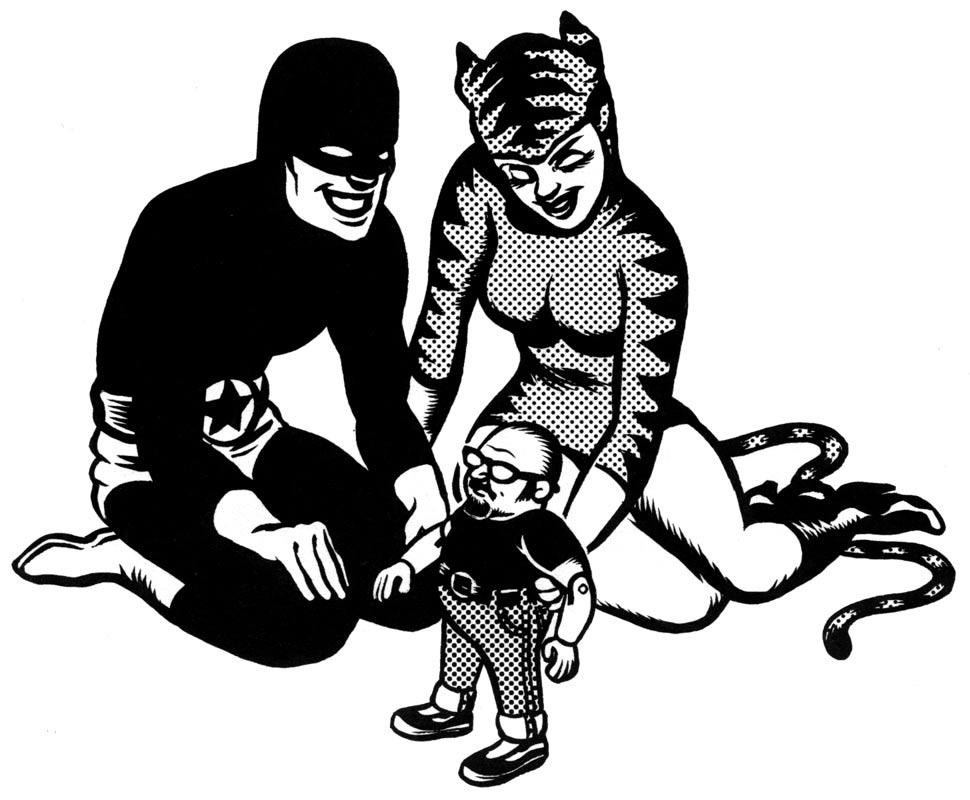
Gutsman and Tigra with a miniature of their artist.
Kriek also portrays himself in the comic strip, often lusting after Tigra and butting heads with Gutsman as his jealous rival. Back in the day, Kriek was a young, single comic artist with a rock 'n' roll attitude and 'Gutsman' reflected this outlook on life. One day, when he participated with the TV quiz 'Tien Voor Taal', he was seen by a female viewer, who later contacted him and became his wife. From the fifth volume of 'Gutsman' on, Kriek started fleshing out his anti-hero. He delved into his youth, showing Gutsman as a three-dimensional personality struggling with fears, lovesickness and addictions.
Between 1994 and 2010, ten comic books starring 'Gutsman' were brought out by publishing company Oog & Blik . Thanks to the lack of dialogue, the comic was easily exported to other countries, appearing in English, French, German, Czech, Spanish, Italian, Serbian, Swedish, Turkish and Arabic. In the United States, they were published by Top Shelf in 2005. In 2000, a mini-comic with Little Andy Roid was published in the 'Pincet' series of the De Plaatjesmaker imprint of Hanco Kolk and Peter de Wit. In 2003 and 2005, Oog & Blik published two 'Little Any Roid' comic books in a vintage 1950s style, complete with fake advertisements. In 2006, 'Gutsman' was even brought to the stage as a "silent" music-theater piece, combining both dance and mime, starring Francisca Rijken, Job Cornelissen and Kriek himself.
While the tenth issue ended the 'Gutsman' series mid-story in 2010, so far no new installments have appeared. Still, the artist is often asked for a continuation, but during the 2010s, Erik Kriek began exploring other artistic paths.

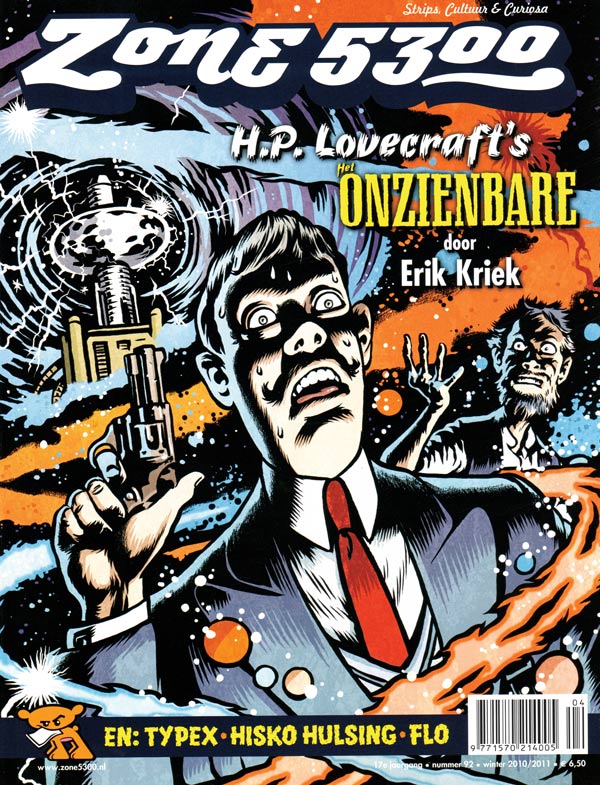
Cover illustrations for Zone 5300.
Comic adaptations
After the 'Gutsman' strips, Zone 5300 magazine also ran Erik Kriek's adaptations of classic horror/sci-fi stories by H.P. Lovecraft (1890-1937), which were later collected in the book 'Het Onzienbare, en Andere Verhalen van H. P. Lovecraft' (Oog & Blik, 2012). It has since been translated into Spanish, French, German, Italian, Swedish and Serbian. It marked Kriek's international breakthrough as a graphic novelist, and a turning point in his comic career. His books all share a strong sense for perfectionism in the production of the books, with high-quality paper, fine workmanship and a slick graphic design, generally done by his studio colleague Rob Westendorp.
This high-quality production was also evident in Kriek's collection of comic interpretations of five murder ballads, a genre of American folk-songs about ill-fated love stories ending in murder. Published to high critical acclaim, 'In The Pines' (Scratch Books, 2016) was accompanied by a CD with the ballads from the book, performed by Kriek and The Bluegrass Boogiemen. The songs that served as the basis for Kriek's comic stories were 'Taneytown' by Steve Earle (1997), 'The Long Black Veil' by Danny Dill and Marijohn Wilkin (1959), 'Caleb Meyer' by Gillian Welch (1998), 'Where The Wild Roses Grow' by Nick Cave and Kylie Minogue (1996), and 'Pretty Polly (And The Ship's Carpenter)', an 18th century traditional. The book has subsequently appeared in English, French, German, Italian, Spanish, Swedish, Serbian and Arabic. It won the 2016 Rudolph Dirks Award in Germany in the category "Best Horror", and was lauded as "Album of the year" during the Dutch Comics Days in Rijswijk in March 2017.
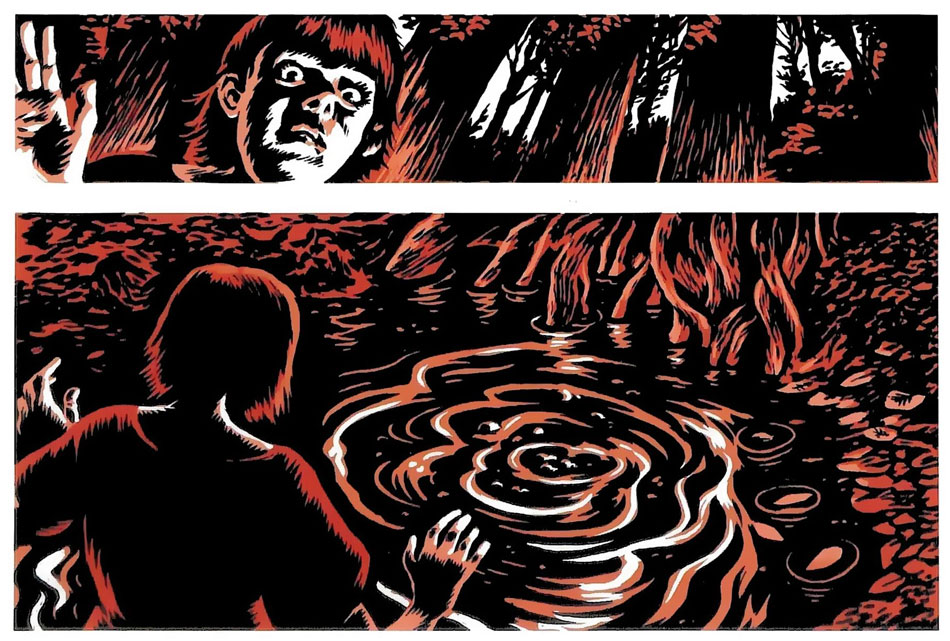
'De Kuil'.
Graphic novels
Kriek's next project was a brand-new story, an epic Viking tale set in 10th-century Iceland, called 'De Balling'. It told the story of Viking warrior Hallstein Thordson, who returns home after a long exile for murdering his best friend Hraffn. The 208-page story was published in Scratch Books in May 2019. The story was inspired by his mother, who has Finnish roots and often took him to visit Viking-related museums. Kriek also cited 'Wickie the Viking' and Jean Van Hamme and Grzegorz Rosinski's 'Thorgal' as influences and especially the 1984 Icelandic cult film 'When the Raven Flies' (1984). The project nevertheless became an ordeal for Kriek, who suffered a brain infarct in November 2018. During a visit at a local bar he suddenly collapsed. When he awoke in a hospital bed, he found that the left half of his body was paralyzed. The doctor also informed him he suffered from diabetes. Luckily, Kriek draws with his right hand, so he could could continue working on 'De Balling', as his body slowly but surely recovered. Since his ordeal, Kriek has completely given up drinking and smoking and started following a more healthy lifestyle.
After the dark woods of North America and the cold hills of medieval Iceland, Kriek chose a contemporary Dutch setting for his next graphic novel, 'De Kuil' ('The Pit', 2023), which has received translations in French, German, English and Spanish. After the tragic loss of their son, a couple move into an old family home in the woods of the Veluwe. They hope to put the sadness behind them and get their lives back on track, but instead are confronted with the mysteries of the woods. An important inspiration for this book was his rehabilitation process after his 2018 brain infarct, making 'De Kuil' the artist's most personal story.
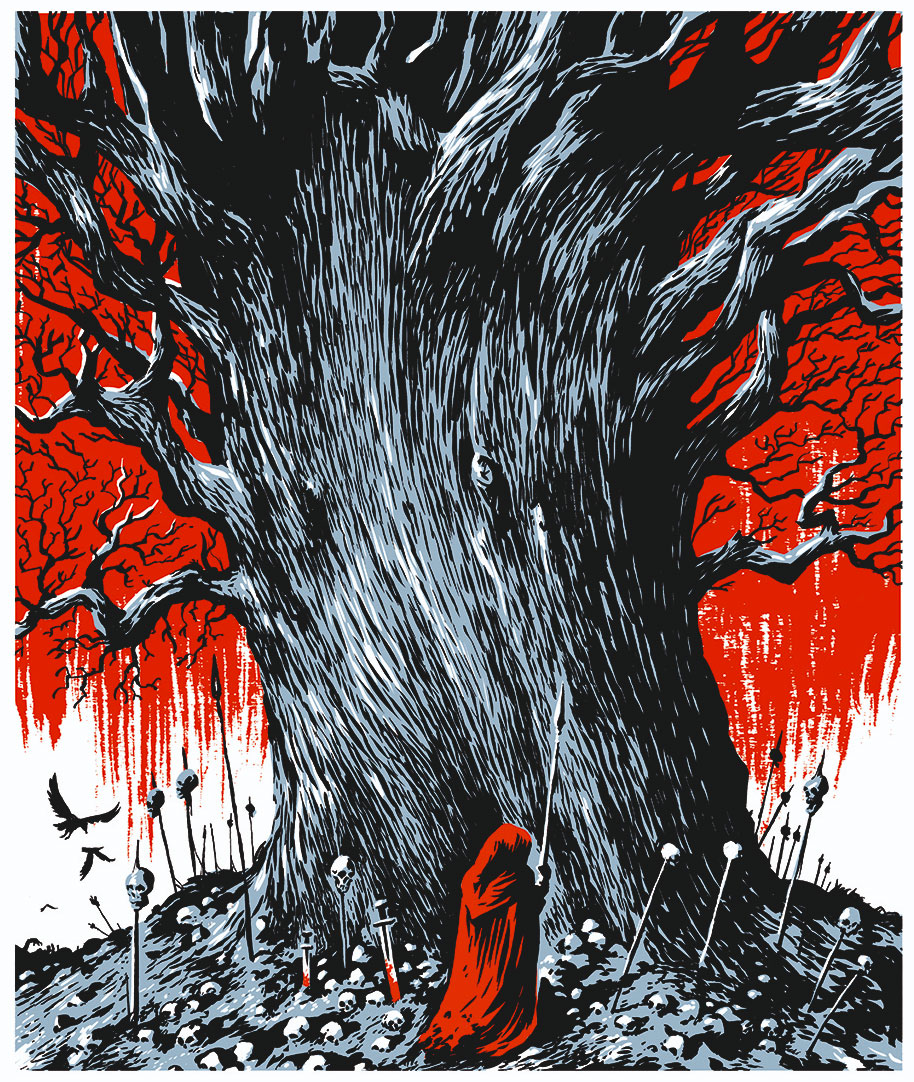
'De Balling'.
Graphic contributions
During the 1990s, additional comic stories by Erik Kriek have appeared in the small press comic magazines Incognito and Gr'nn. In 1998, he also participated in Incognito's chain comic 'Het Lieve Leven'. In later years, Kriek comics appeared in the newspapers De Volkskrant and NRC Next, the cultural magazine Hollands Diep and the literary comic magazine Eisner.
In 2006, he was one of several contributing comic creators to the anthology 'Strips in Stereo', initiated by Jean-Marc van Tol and Gerrit de Jager, for which he made a graphic interpretation of the Boudewijn de Groot song 'Malle Babbe'. He also appeared in the 2010 anthology 'Mooi Is Dat!', visualizing the medieval chivalric tale 'Karel ende Elegast', and in the first volume of 'Op Missie' (2014), an anthology series by Strip2000 in which comic artists visualize true-life stories by war veterans.
He participated in the collective graphic documentary comic 'Bestemming: Canada' (2022), published by Scratch Books in collaboration with the Dutch consulate in Canada. The book tells the story of ten Dutch emigrants who tried to find their luck in the Canadian wilderness. The other contributors were Erik de Graaf, Floor de Goede, Aimée de Jongh, Hanco Kolk, Mei-Li Nieuwland, Jordi Peters, Emma Ringelberg, Anne Staal and Paul Teng. For Ger Apeldoorn's 2024 'Pep Nu' anthology, Erik Kriek made a three-page graphic interpretation of another Lovecraft poem, translated by Bies van Ede.
In addition, Kriek paid homage to Marten Toonder in the tribute book 'Was Tom Poes Maar Hier - Een Hommage aan Marten Toonder' (De Bezige Bij, 2006). Six years later, Kriek, along with several other Dutch artists, contributed to 'Bommel en de Bovenbazen', a collectively redrawn version of Marten Toonder's classic 'Tom Poes' story, serialized in NRC Handelsblad between 2 May through 21 September 2012.
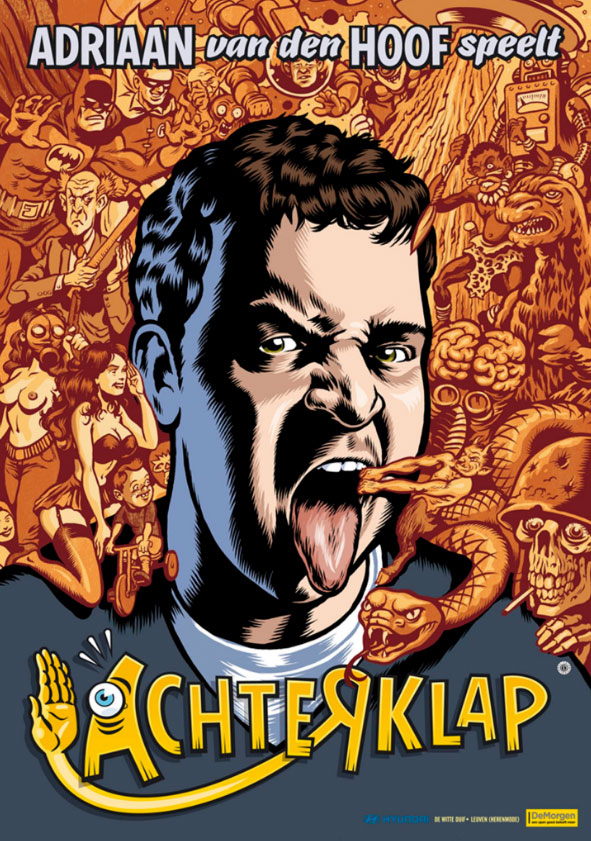
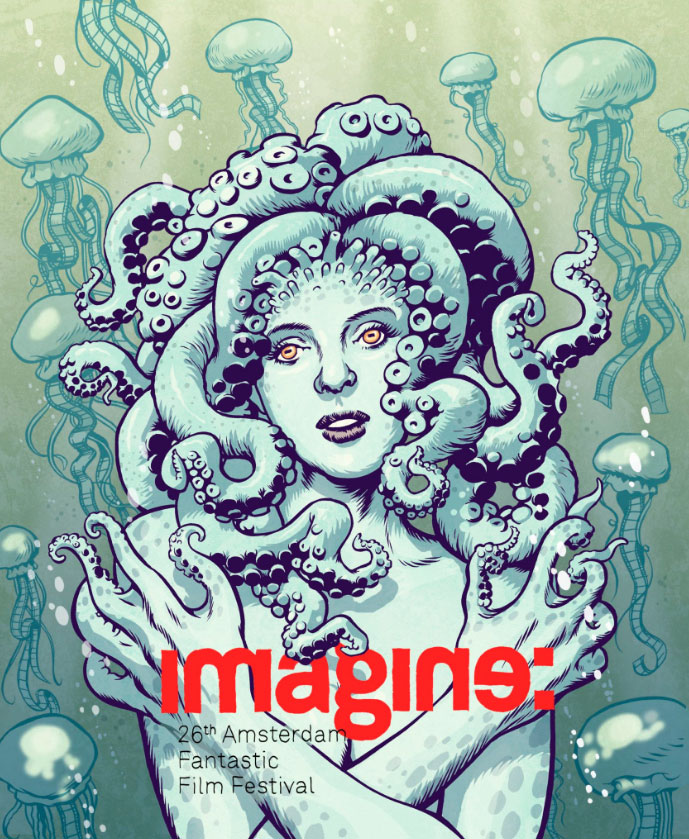
Illustrations for a 2008 cabaret show by Adriaan van den Hoof and the 26th Imagine Amsterdam Film Festival.
Illustrator
Represented by the Comic House agency, Erik Kriek has worked as an illustrator for a wide variety of national and international magazines and newspapers, including VPRO Gids, Vrij Nederland, HP/De Tijd, NRC, De Volkskrant, Playboy and Onze Taal from his home country, Weltwoche from Switzerland, Die Welt from Germany, and Maxim and the Boston Globe from the USA. In 2008, he illustrated the cover of Geert De Weyer's book '100 Stripklassiekers Die Niet In Je Boekenkast Mogen Ontbreken' (2008), a guide to 100 essential classic comic series. He has also designed covers for the Dutch editions of Tolkien books by the publishing house Meulenhoff and for the pocket books of J.K. Rowling's 'Harry Potter' series by De Harmonie. In 2022, he also provided the cover illustration for a new Dutch edition of Lovecraft's 'The Case of Charles Dexter Ward', translated by Bies van Ede.
In addition, his designs have appeared on T-shirts, skateboards and sneakers, and on album covers for artists like Beyond Lickin' ('High Heels Fuzz', 2010) and Anouk ('Fake It Till We Die', 2016). In late 2016, Erik Kriek released his first children's book, 'Mika, Het Beertje Dat Niet Slapen Wilde' ('Mika, The Little Bear That Didn't Want To Go To Sleep'), in the Dutch "Little Golden Books" collection of the publishing house Rubinstein.
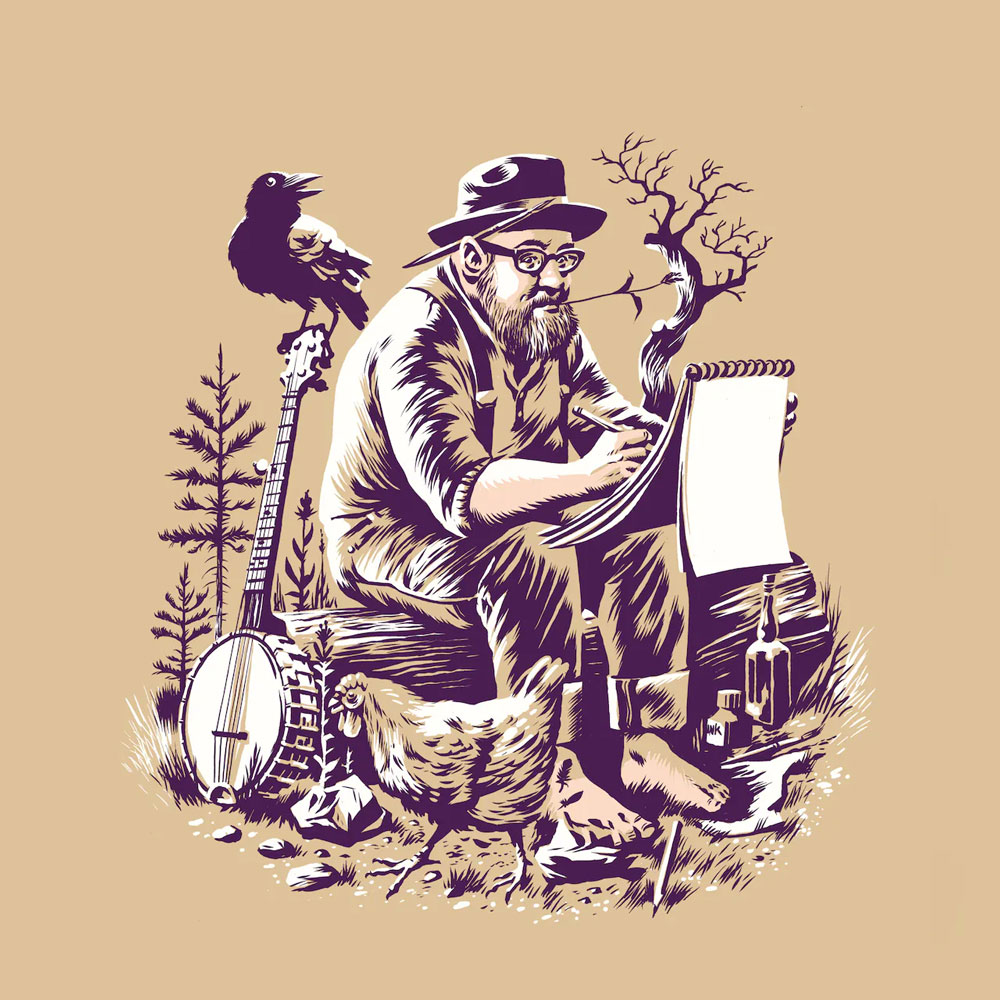
Self-portrait.
Art books
When he's not sweating it out over the drawing board, Erik Kriek has been performing on stage in Irish bars, as a singer and banjo player. Mmusic has also played an important role as a stimulus during his drawing process. To honor his favorite artists, Kriek created the art book 'Creek Country' (Concerto Books, 2020), with 50 portraits of folk, country and bluegrass musicians. Like 'In The Pines', the book is accompanied by a CD with a selection of songs, performed by Tim Knol and the Blue Grass Boogiemen.
In February 2026, Concertobooks released the massive art book 'De Totale Kriek: Het Beste van 35 Jaar Grafiek, Tekeningen, Illustraties en Strips'. Compiled and designed by Rob Westendorp, the book presents a large graphic overview of Erik Kriek's varied work in comics, illustration and graphic art. It was the second art book initiated by his publisher Hansje Joustra, the first was dedicated to Peter van Dongen ('Voldongen', 2024).


Left: flyer for an exhibition of Erik Kriek's work in Gallery Lambiek in March 1997. Right: For the 40th anniversary of the Amsterdam-based comics shop Lambiek in 2008, Erik Kriek designed this EC pastiche, starring Lambiek's Kees Kousemaker, Klaas Knol and Boris Kousemaker
Recognition
During the Stripdagen comic festival in Houten of 27 September 2008, Erik Kriek received the annual Stripschap Prize. At the time, he only had 300 comic pages credited to his name, making him the artist with the smallest oeuvre to receive the prestigious award. His book 'Het Onzienbare' received the 2012 Haxtur Award for "Best Short Story", and 'In the Pines' won the 2016 Rudolph Dirks Award for "Best Horror".
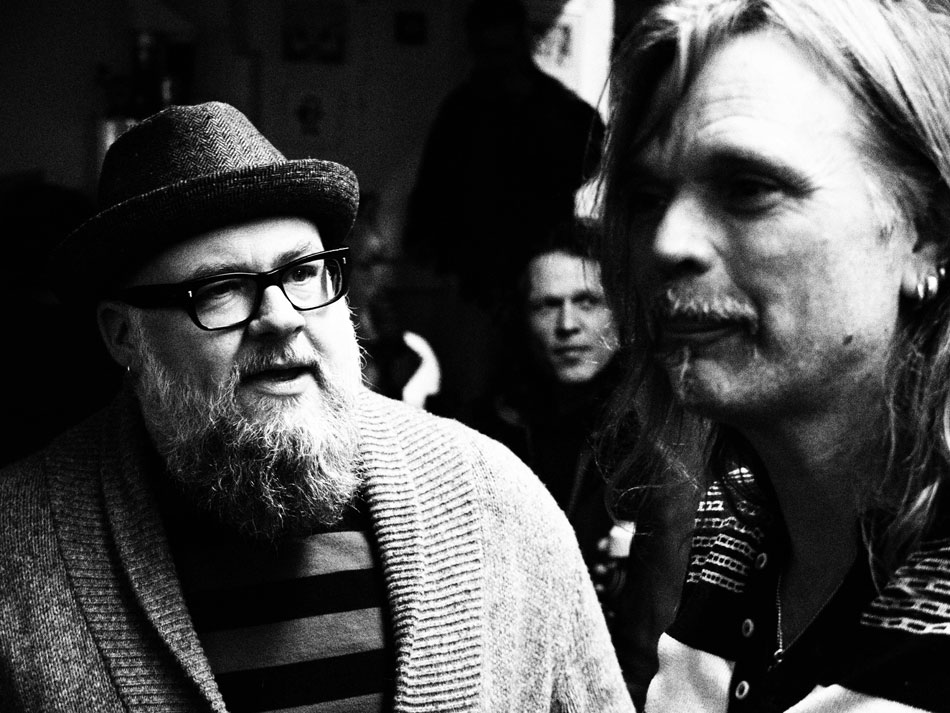
Erik Kriek with Typex at the 45th anniversary of comic shop Lambiek (2013).